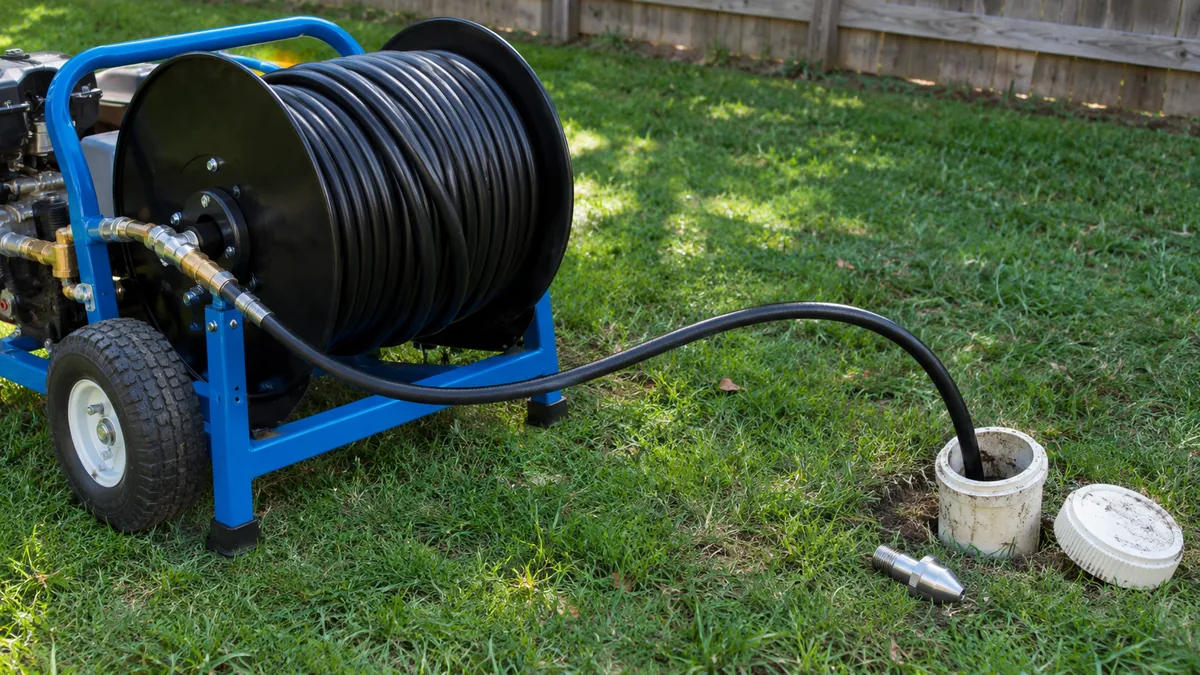
Hydro jetting cleans a drain or sewer line with a high-pressure stream of water. A nozzle with forward and rear-facing jets is fed into the pipe through a cleanout. The rear jets pull the hose along while the spray scours grease, scale and fine roots off the full pipe wall, then flushes the debris out to the city sewer.
When hydro jetting is the right call in Enid
A cable machine punches a hole through a clog. Jetting removes the buildup around it. That difference matters for these problems:
- Kitchen lines full of grease. Years of cooking fat coat the branch line from the kitchen sink. Cabling opens it for a while; jetting removes the coating.
- Clogs that keep coming back. If the same drain has been cleared two or three times in a year, the buildup left on the pipe wall is the likely reason.
- Scale in cast iron. Older cast iron drain pipe rusts and scales on the inside, which narrows the pipe and snags waste.
- Fine roots after cutting. After a root cutter clears the main blockage, jetting flushes out the root hairs and debris the cutter leaves behind.
When it is not the right call
Jetting is powerful, and pressure is not always what a pipe needs. It is not the first choice when:
- The pipe is already cracked, separated at a joint or partly collapsed. Water under pressure can make a broken section worse.
- Nobody knows what condition an old clay or Orangeburg line is in. A camera inspection comes first.
- The clog is a single object, like a toy or a toothbrush, sitting in a toilet or trap.
The tech checks the line before choosing the method, and tells you why.
Side-by-side comparison, including cost and how long the result lasts: hydro jetting vs snaking.
Jetting in older Enid homes
In houses built before 1970, the kitchen often drains through a cast iron branch line that has never been cleaned. Inside, rust scale and grease combine into a rough, narrowed pipe that catches food waste. Jetting from a cleanout, at a pressure suited to cast iron, removes that layer and restores most of the pipe’s original opening. Where the main line is clay, the camera check comes first, because clay pipe that has shifted in Oklahoma’s clay soil can have open or offset joints that need gentler treatment.
Newer homes with PVC drain lines have smoother pipe and fewer problems, but kitchen grease builds up there too. In those homes jetting is mostly the answer for a kitchen line that clogs every few months.
How a hydro jetting visit works
- Look before jetting. If the line condition is unknown, a camera run comes first.
- Price confirmed. You agree the price before the jetter starts.
- Jet from the cleanout. The hose is fed toward the street, with pressure and nozzle chosen for the pipe size and material.
- Flush and test. The line is flushed and several fixtures are run to confirm full flow.
Hydro jetting cost
Jetting costs more than cabling because of the equipment and time involved. National 2026 estimates for a residential main sewer line from an accessible cleanout run roughly $350 to $1,000, and some cost guides report higher averages. Kitchen branch lines cost less than a full main line. On the call you get the typical range for your job, and the tech confirms the price before starting. See drain cleaning cost in Enid for all the ranges.
Keep a jetted line clear for longer
- Scrape pans into the trash, not the sink, and wipe greasy pans with a paper towel before washing.
- Keep wipes, paper towels and cotton pads out of toilets, even if the package says flushable.
- Run hot water for a minute after using the garbage disposal.
- If roots were the problem, ask how quickly they are likely to return so you can plan the next cleaning before a backup.
Hydro jetting questions
Can hydro jetting damage pipes?
It can make an already broken or badly deteriorated pipe worse. That is why the line condition is checked first, with a camera when needed, and pressure is matched to the pipe.
Does hydro jetting remove tree roots?
It removes fine roots and flushes out root debris. Thick roots are usually cut first with a cable machine, then the line is jetted to clean it out.
How long does hydro jetting take?
A kitchen branch line often takes under an hour. A full main line usually takes one to three hours depending on length, buildup and access.
Is jetting worth it for a single slow sink?
Usually not the first time. A cable or a trap cleaning is enough for most one-off clogs. Jetting earns its cost when the same line keeps clogging.