
The clearest sign of a main sewer line clog in an Enid home is more than one drain backing up at the same time, with the lowest drains in the house (a tub, shower or floor drain) affected first. Other signs are water rising in the tub when you flush, gurgling toilets, and water standing in the outdoor cleanout.
7 signs the problem is the main line, not one drain
- Several fixtures are slow at once. A sink and a tub on different branch lines rarely clog on the same day by coincidence.
- The tub or shower fills when you flush. Water from the toilet cannot get out to the street, so it rises at the next lowest opening.
- The floor drain backs up when the washer empties. A washing machine sends a large volume of water at once, which a partly blocked main line cannot carry.
- Toilets gurgle or bubble when a sink, tub or washer drains. Air is being pushed back through the water in the toilet bowl.
- Sewage smell around floor drains or outside near the cleanout.
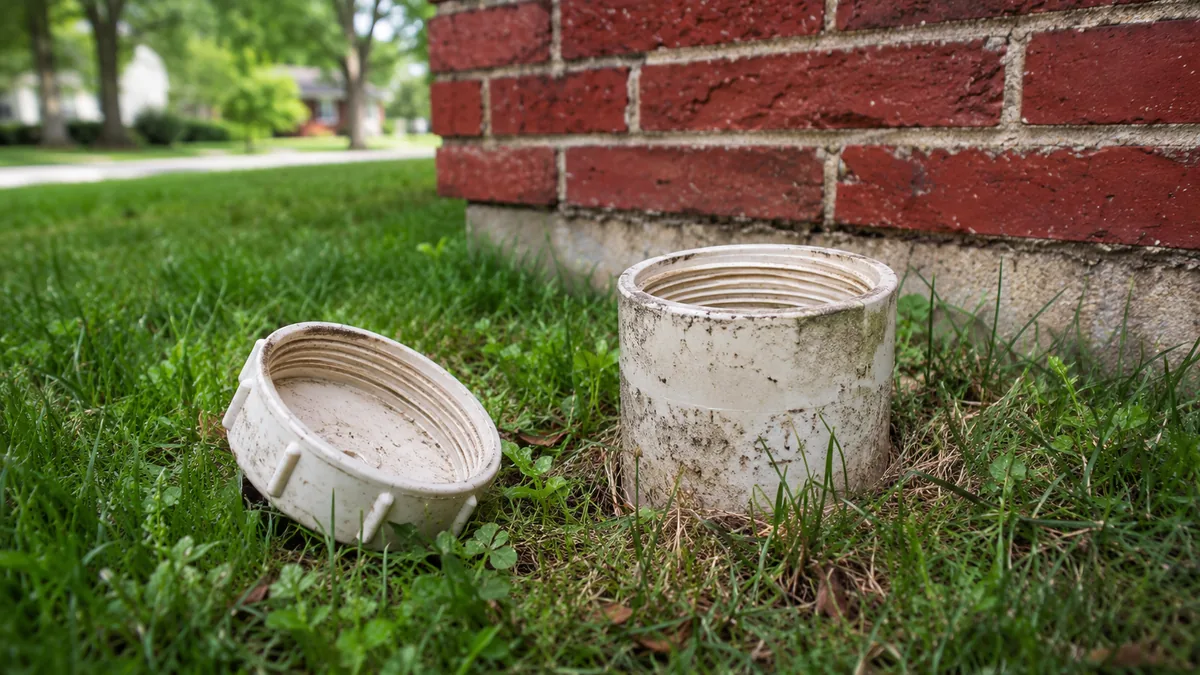
- Water in the outdoor cleanout. A cleanout should be empty. Standing water means the blockage is between the cleanout and the city sewer.
- Wet or sunken spots in the yard over the sewer line, which can mean a broken pipe rather than a simple clog.
A quick test you can do
With nothing else running, flush the toilet closest to the main line, usually on the lowest floor, and watch the tub or shower drain on that floor. If water comes up in the tub or the toilet drains very slowly, the main line is the likely problem. If the toilet flushes normally and only one sink is slow, the clog is in that sink’s branch line.
Branch line clog vs main line clog
| Symptom | Branch line | Main line |
|---|---|---|
| Number of drains affected | One | Several |
| Which drains | Any single fixture | Lowest drains first |
| Toilet flush affects other fixtures | No | Yes, tub or floor drain rises |
| Outdoor cleanout | Dry | Often has standing water |
| Usual fix | Plunger, trap cleaning or hand auger | Sectional cable machine or hydro jetting from the cleanout |
What usually blocks a main line in Enid homes
- Tree roots entering clay pipe joints, common in the older parts of Enid where more than half the homes date from before 1970.
- Grease that cools and builds up over years.
- Wipes, paper towels and hygiene products that do not break down like toilet paper.
- A sag or offset joint where clay soil has shifted the pipe and waste collects.
What to do next
Stop running water, then call (580) 555-0123. Tell us which fixtures are affected and whether there is water in the cleanout. Most main line blockages are cleared through the cleanout with a cable machine. If the line clogs again soon after, a camera inspection shows why. Details on the service: sewer line cleaning in Enid.
Main line clog questions
Can a main sewer line clear itself?
A partial blockage can seem to clear when water use drops, but the cause is still there. It usually returns, often at a worse time, so it is better to have it cleared while it is still partial.
Can I plunge a main line clog?
No. A plunger works on the fixture and its trap. A main line blockage is too far down the system and needs a machine through the cleanout.
Why does only the basement drain back up?
It is the lowest opening in the house, so water backing up from a blocked main line reaches it first. That is a main line warning even if upstairs drains still work.
Does a main line backup during rain mean a clog?
Not always. Storm water entering the sewer can overload it even without a clog. See why the sewer backs up when it rains.